
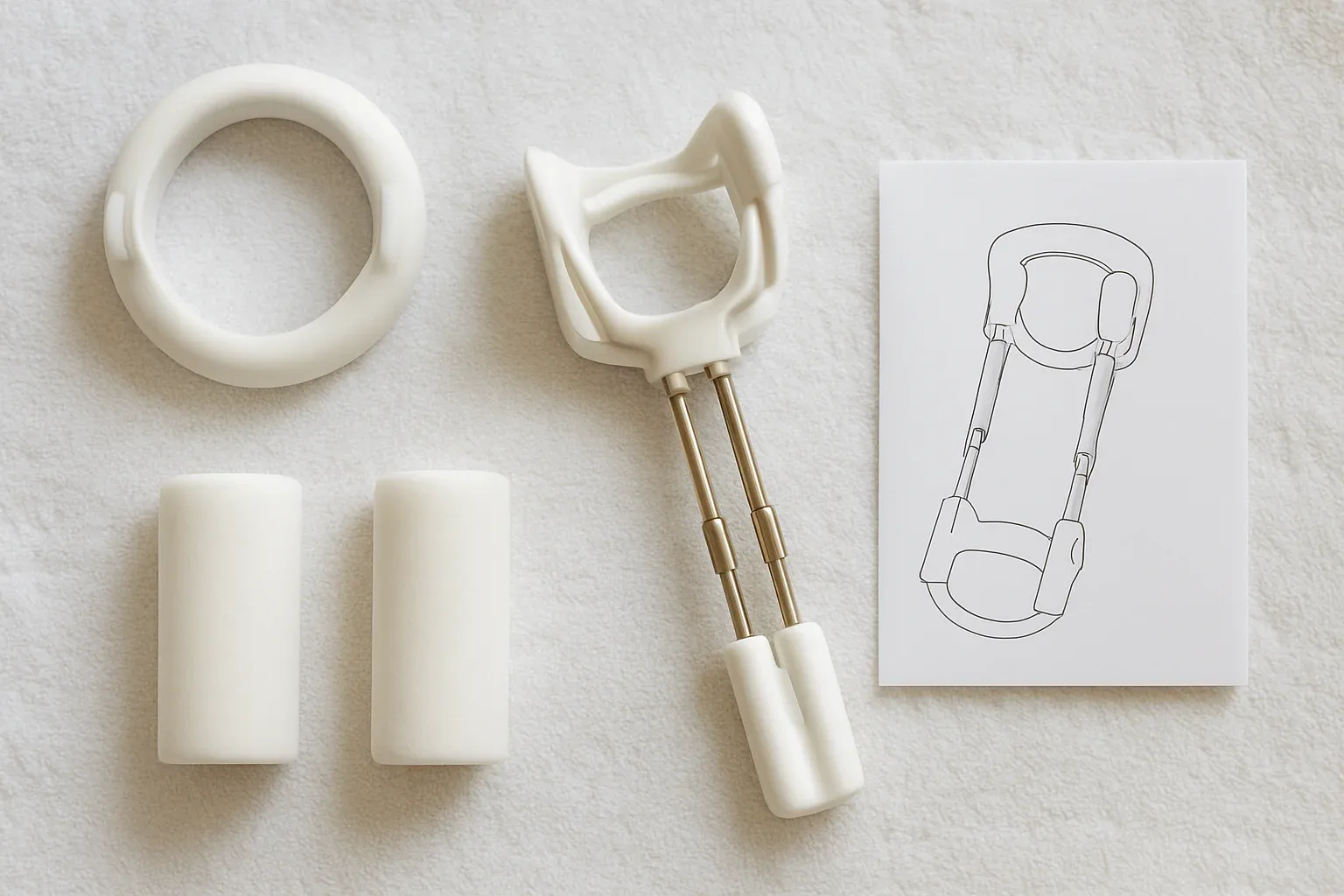
To wear a penis extender without overdoing it, start with the lightest tension that gives you a mild stretch, fit each part evenly, and keep your first sessions short. It should feel secure, not painful. If you notice pinching, numbness, unusual coldness, or a clear color change, remove it and reset the fit before continuing.
In simple terms, how to use a penis extender is this: fit it evenly, start with minimal tension, wear it briefly, and adjust before discomfort builds. These are general penile extender instructions, not a substitute for the manual that came with your device. Different brands use slightly different supports, straps, and comfort sleeves. If you want a simple primer on how traction devices are generally thought to work, read that first, then use the fitting tips below to build a manageable beginner routine.
What to check before your first session
Most first-day problems start before the device is even on. Take a few minutes to slow down and check the basics:
- Read the manual first. Even if two extenders look similar, their fitting order can differ.
- Inspect the parts. Make sure the ring, rods, support, and any sleeves or pads are clean and free from damage.
- Start with clean, dry skin. Lotion, oil, or sweat can make the support slip and tempt you to overtighten it.
- Do not start on irritated skin. If you already have cuts, swelling, soreness, or broken skin, wait until things settle.
- Choose a calm first session. Do not try to learn the fit when you are rushing out the door or planning to wear it for hours.
If you have a recent injury or surgery, a skin condition, reduced sensation, or any circulation concern, it is sensible to speak with a doctor before using a traction device. A little caution up front is better than forcing a bad first experience.
How to fit the base ring, rods, and support correctly
The exact order depends on the model, but the goal is always the same: even alignment, secure hold, and low starting tension.
1) Start with the shortest workable rod setting
New buyers often make the rods too long on day one. That creates more tension than they realize. Start with the shortest setting that lets the device sit straight and removes slack once it is secured. You can always add length later, but it is harder to rescue a fit that starts too aggressive.
2) Fit the base ring so it sits flat
The base ring should rest evenly at the base of the penis. It should feel stable, but it should not dig in, twist, or pinch on one side. If it feels crooked, take it off and start again rather than tightening the upper support to compensate.
3) Attach the support with just enough hold
Depending on the device, this may be a strap, loop, or another support style. The key point is simple: it should hold the tip securely enough that the device does not slip, but not so tightly that it creates sharp pressure. If your model includes silicone sleeves, foam pads, or comfort caps, use the parts recommended by the manufacturer instead of improvising.
4) Check alignment before adding more tension
Once everything is assembled, the shaft should be centered between the rods and the device should feel straight rather than twisted. Add tension slowly and stop at the first point where you feel a light, controlled stretch. You do not need to max it out for the session to count.
A quick recheck after a few minutes matters. Small shifts are common once you stand, sit, or move around, and a fit that seemed fine at first can start pressing in the wrong place.
How tight should an extender be?
A penis extender should feel like a gentle pull, not a clamp. As a beginner, aim for the minimum tension that keeps the device secure and creates a mild stretch. If you are debating between just enough and a little more, choose less. Comfort is not a bonus with traction devices; it is part of using them consistently and more safely.
| What you notice | What it usually means | What to do |
|---|---|---|
| Light stretch, stable fit, normal warmth and color | Tension is probably in a reasonable beginner range | Stay there and keep the session short |
| Device slips, support will not hold, almost no stretch | The fit is too loose or the rod setting is off | Refit the support and check rod length before adding more tension |
| Pinching, numbness, throbbing, unusual coldness, pale or dark color change | The fit is too tight or pressure is uneven | Remove the device right away and reset with less tension |
If discomfort keeps returning in the same spot, that is usually a fitting problem, not a sign that you should push through. Lower the tension, reduce session length, and re-seat the device.
How long to wear it when starting out
For a beginner extender routine, shorter and repeatable beats ambitious and inconsistent. Your first week is about learning fit, not chasing long hours. A conservative approach is to start low, see how your skin and comfort respond, and only add time when sessions stay comfortable. If your manual gives a stricter schedule, follow the lower number.
| Stage | Total daily wear time | Tension goal | Focus |
|---|---|---|---|
| Days 1-3 | 15-30 minutes | Very light | Learn the fit and look for pressure points |
| Days 4-7 | 30-60 minutes | Light | Build consistency without discomfort |
| Week 2 | 60-90 minutes, split into short sessions | Light | Increase time only if the device stays comfortable |
| Week 3 and beyond | Increase gradually if fully comfortable | Light to moderate, never painful | Prioritize steady use over aggressive jumps |
You do not need to jump to multi-hour wear right away. A good rule is to finish a session feeling like you could have done a little more, not like you barely made it through. Brief breaks to inspect your skin and recheck the fit are smart, especially at the start.
Common setup mistakes that cause discomfort
- Starting with too much rod length: This is one of the fastest ways to create pressure and soreness. Start shorter than you think you need.
- Overtightening the support: Many beginners try to stop slipping by tightening the upper support harder. Often the real fix is better alignment or a smaller rod setting.
- Uneven rods: If one side is longer than the other, the device can twist and create a hot spot instead of an even stretch.
- Using it on damp or oily skin: Slipping leads to constant readjusting, and readjusting often turns into overtightening.
- Ignoring early warning signs: Pain, numbness, or color change are signals to stop and refit, not signs of a useful session.
- Wearing it when you cannot monitor it: Falling asleep in the device or wearing it when you know you cannot check the fit is a bad idea.
If the same mistake keeps happening, simplify. Lower the tension, shorten the rods, and rebuild from a basic fit rather than tweaking several variables at once.
How to adjust for better comfort and consistency
The best penis extender comfort tips are usually small adjustments, not dramatic ones. If a device feels close to comfortable but not quite there, try this order:
- Reduce tension one step. This solves more problems than most buyers expect.
- Shorten the session. Two manageable sessions are better than one long, frustrating one.
- Re-seat the support. Even a slight shift can create a pressure point.
- Check that both rods match. Symmetry matters.
- Use the comfort parts that came with the device. Replace worn sleeves or pads when they stop doing their job.
- Keep notes. Write down the rod setting, tension level, and wear time that felt best so you can repeat it.
If you are still choosing a model, comfort features vary more than many buyers expect. The comparison chart is helpful for a side-by-side look, and the Male Edge review and Jes Extender review discuss comfort and day-to-day wearability in more detail. On the other side, the Quick Extender review is a reminder not to dismiss recurring discomfort as normal.
When to stop and ask a doctor
Stop using the extender and speak with a doctor if you get persistent pain, broken skin, swelling, bruising, or numbness that does not settle after removal. The same goes for symptoms that keep returning even at low tension. A traction device should be used carefully and gradually; if your body is clearly not tolerating the setup, it is better to pause than force it.
Final takeaway
If you remember only one thing, make it this: the right beginner setup feels mild, even, and sustainable. Start with low tension, short sessions, and careful fit checks, then build slowly. If you want to compare designs before buying or replacing a device, browse the review library and look closely at comfort as much as headline claims.
Frequently asked questions
How tight should a penis extender be?
It should feel like a light, controlled stretch, not pressure or pain. If you feel pinching, numbness, unusual coldness, or notice a color change, it is too tight and should be removed and refit.
How long should a beginner wear a penis extender?
Start with short sessions, often around 15 to 30 minutes, then increase gradually only if the fit stays comfortable. If your device manual gives a stricter ramp-up plan, follow that instead.
Should a penis extender hurt?
No. Mild stretching sensation can be normal, but sharp pain, throbbing, numbness, or recurring sore spots are signs to stop and adjust the setup.
What if the extender keeps slipping off?
First check that the skin and device parts are clean and dry, then re-seat the support and confirm the rod length is not too long. Slipping often means the fit is off, not that you should tighten the support as much as possible.
Can you sleep in a penis extender?
It is not a good idea. You should be able to monitor comfort, skin condition, and circulation during use, which is not possible while sleeping.