
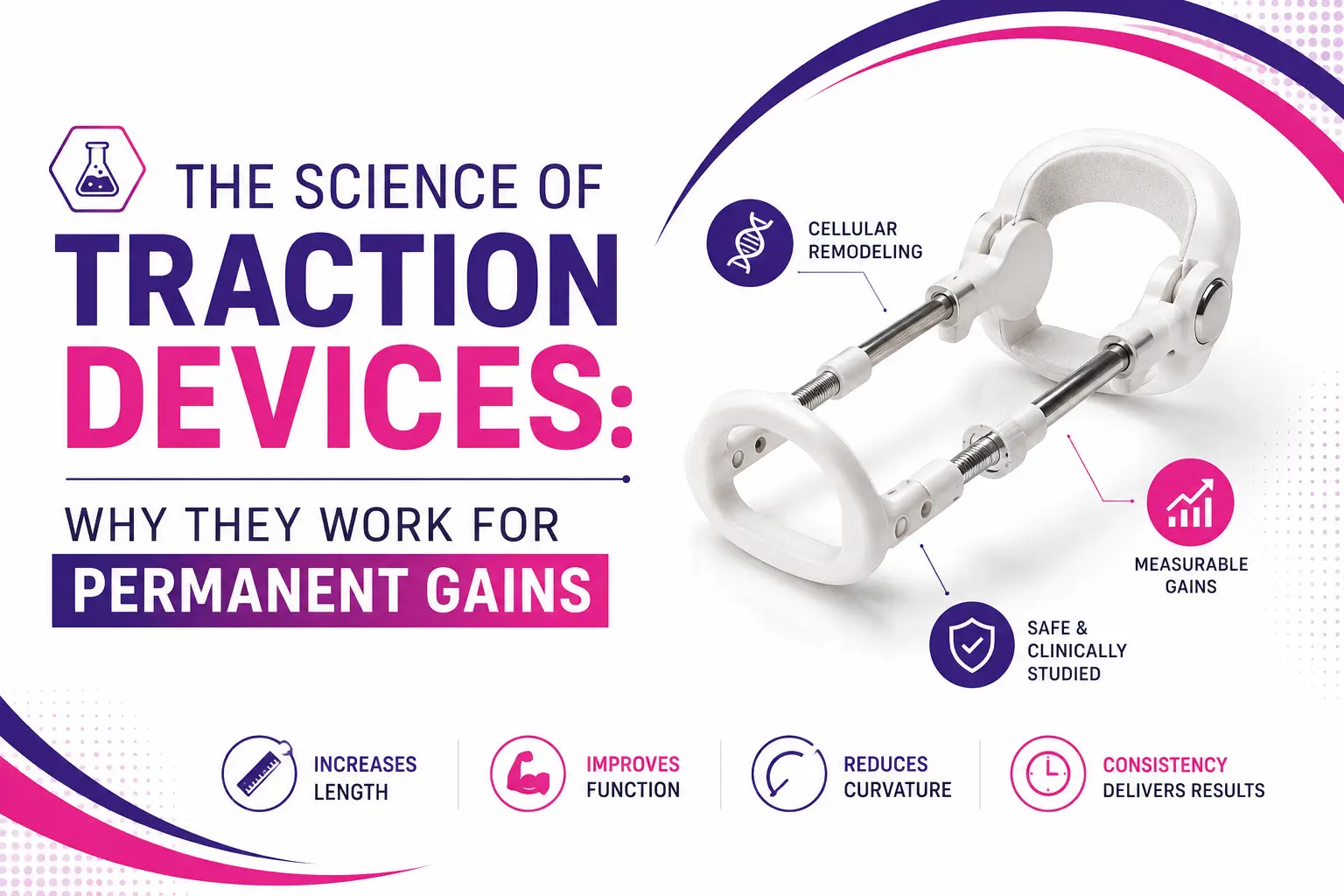
Traction devices, also called penile extenders, use steady mechanical stretch to trigger tissue change. Men wear a device that applies gentle tension for periods each day. Over weeks and months, that tension can produce measurable length gains and improve function for some men. This article explains how traction works, what the data show, and how to use devices safely and effectively.
How traction Devices creates real tissue change
Cells sense and respond to physical force. Researchers call this process mechanotransduction. When you stretch tissue, cells change their gene activity. They ramp up collagen remodeling, matrix metalloproteinases, and growth pathways. These changes lead to new extracellular matrix buildup and gradual tissue lengthening. Scientists have demonstrated this pattern in lab studies and in clinical settings for other tissues, such as bone and skin. The same basic biology underlies why traction can change penile tissue over time.
Animal models and cell-culture work back up the human data. Studies show that cyclic strain and steady stretch alter cell signaling in tunica albuginea cells. These signals drive structural remodeling and can reduce fibrosis in cases such as Peyronie’s disease. In short, the tissue adapts to the load you place on it. That adaptation can yield permanent changes when the protocol stays consistent.
What the clinical data say — measurable gains and realistic expectations
Clinical trials and published reports show that traction devices can increase stretched penile length by measurable amounts. Early trials reported gains of about 1 to 3 centimeters after several months of regular use. One small 2011 clinical study found significant increases in both flaccid and stretched length during follow-up at one and three months. The increases correlated with wear time.
Larger and more recent trials support those findings. Randomized and prospective studies using modern devices report clinically meaningful length gains and improvements in curvature for men with Peyronie’s disease. Some trials recorded average gains near 1.5 to 3.0 centimeters after consistent traction over three to six months. A randomized study of a newer device reported significant improvements with daily sessions as short as 30 to 90 minutes. Those shorter, focused sessions provide an alternative to older protocols that required many hours per day.
Systematic reviews and meta-analyses show a consistent signal. Reviews note average increases across studies and document better outcomes when men use devices consistently and follow gradual escalation plans. Reviews also highlight that results vary by device, wear time, and individual biology. Expect gradual, not immediate, change.
Traction for Peyronie’s disease and post-surgery rehabilitation
Doctors use traction devices in two common clinical settings. First, clinicians use them for men with Peyronie’s disease to reduce curvature and regain lost length. Trials demonstrate that traction often reduces curvature degrees and softens plaques while increasing length and girth in some patients. Second, specialists use traction after prostate cancer surgery to prevent or reduce post-operative penile shortening and to support erectile rehabilitation. Evidence indicates traction helps in both settings when patients follow device protocols closely.
Keep in mind that traction works best for mild to moderate curvature and for men who commit to a regular schedule. Surgeons sometimes combine traction with other medical treatments for better outcomes. Talk with a urologist to figure out whether traction fits your case and how to combine it with other therapies.
Typical protocols: time, tension, and progression
Protocols vary by device and study, but two consistent principles apply. First, start low on tension. Second, increase wear time gradually. Older studies commonly used multiple hours per day, often four or more. Newer trials show benefit with shorter daily sessions of 30 to 90 minutes, provided patients remain consistent. The key is steady, repeated mechanical stimulus rather than intermittent heavy stretching.
A safe, practical schedule looks like this:
- Week 1–2: Short sessions (20–30 minutes) at low tension to build tolerance.
- Weeks 3–8: Increase to 30–60 minutes daily and slightly raise tension if comfortable.
- After 2 months: Aim for consistent daily use as advised by your device guide. Track length and comfort.
- Months 3–6: Expect measurable gains if you maintain the routine.
Always follow the manufacturer instructions and your clinician’s advice. Stop or reduce traction if you feel sharp pain, numbness, or severe bruising.
How much gain can you expect and how long it takes
Expect gradual gains. Most studies report measurable length change after three months. Many men see clearer gains by six months. Typical ranges in published work fall between 1 and 3 centimeters, with some reports of larger improvements under strict, long protocols. Results vary by baseline anatomy, age, tissue elasticity, and compliance with the wear schedule. Track progress with consistent measurements to avoid self-bias.
Avoid promises of dramatic overnight increases. Traction drives cellular remodeling, and remodeling requires time. Men who commit to the protocol and avoid shortcuts get the best outcomes.
Benefits beyond length: curvature, function, and erections
Traction devices can do more than lengthen. Research shows benefits for reducing curvature in Peyronie’s disease and improving erectile function metrics in some men. Studies report average curvature reductions and improved erectile scores after traction therapy. Clinicians observe better penile geometry and reduced hinge effects, which helps sexual function. That said, traction does not fix every case and works best when combined with medical or surgical options where appropriate.
Safety and side effects
Traction carries low risk when you follow directions. Common, mild effects include temporary redness, mild soreness, and transient numbness. Overstretching or too-fast escalation increases the risk of bruising, blistering, or tissue injury. Serious complications remain rare in clinical reports, but you must monitor wear, hygiene, and fit. If you have diabetes, peripheral vascular disease, or fragile skin, consult your doctor first. Evidence supports supervised use in clinical settings for men with medical conditions.
Choosing a device and measuring progress
Select a device with clinical data and clear instructions. Look for adjustable tension, comfortable padding, and an established protocol. Prefer devices that include a gradual wear schedule. Read user manuals and check for published trials on the specific model you plan to use. Devices with randomized or prospective data offer better confidence than untested products.
Measure progress the same way each time. Use stretched penile length from the pubic bone to the tip as a reproducible measure. Take photos under consistent lighting if you want a visual record. Keep a log of wear time, tension level, and any side effects. Share this log with your clinician to guide adjustments.
Practical tips to get the best results
- Commit to consistency. Daily use matters more than high tension.
- Start gradually. Build up time and tension to avoid injury.
- Keep skin clean. Hygiene reduces irritation and infection risk.
- Use padding. Proper padding prevents pressure sores and improves comfort.
- Track objectively. Measure and record progress weekly or biweekly.
- Combine wisely. Clinicians sometimes pair traction with medications or injections for Peyronie’s disease. Discuss combinations with a urologist.
Bottom line
Traction devices rely on sound biological principles. Mechanotransduction drives cells to remodel connective tissue under steady stretch. Clinical trials show consistent, measurable gains in length and curvature when men use devices properly over months. Devices work best with realistic expectations, steady use, and medical oversight when needed. If you choose traction, follow a gradual protocol, monitor progress, and consult a urologist to keep your plan safe and effective. The science supports traction as a non-surgical option for permanent gains in selected men.